
Search Ohio Probate Court Records
Ohio probate court records are kept at the county level. Each of Ohio's 88 counties has its own probate court that handles estate cases, guardianship filings, wills, marriage licenses, and more. You can search many of these probate court records online through county court portals or visit the courthouse in person. The probate judge in each Ohio county also serves as the clerk of the probate court, so staff can help you find case files and get copies. If you need a specific probate court record from Ohio, start with the county where the case was filed.
Ohio Probate Court Records Overview
Where to Find Ohio Probate Court Records
Ohio probate court records live at the county courthouse. The Ohio Constitution sets up a probate court in each of the 88 counties under Article IV, Section 1. These courts are a branch of the Court of Common Pleas, but they run on their own with a judge who also acts as the clerk. The probate judge keeps all case files, and deputy clerks help the public with record requests. Walk in during office hours and staff can pull up what you need.
The scope of Ohio probate court records is wide. Under Ohio Revised Code Section 2101.24, probate courts hold sole power over estate cases, guardianship of minors and adults, wills, trust oversight, adoptions, marriage licenses, name changes, and civil commitments for mental health. That means most life events that touch the court system in Ohio end up in probate court records at some point. Each case creates a file with all the forms, orders, and reports tied to it.
The Ohio Revised Code spells out what falls under probate court jurisdiction, including fiduciary appointments, estate settlements, and wrongful death actions.
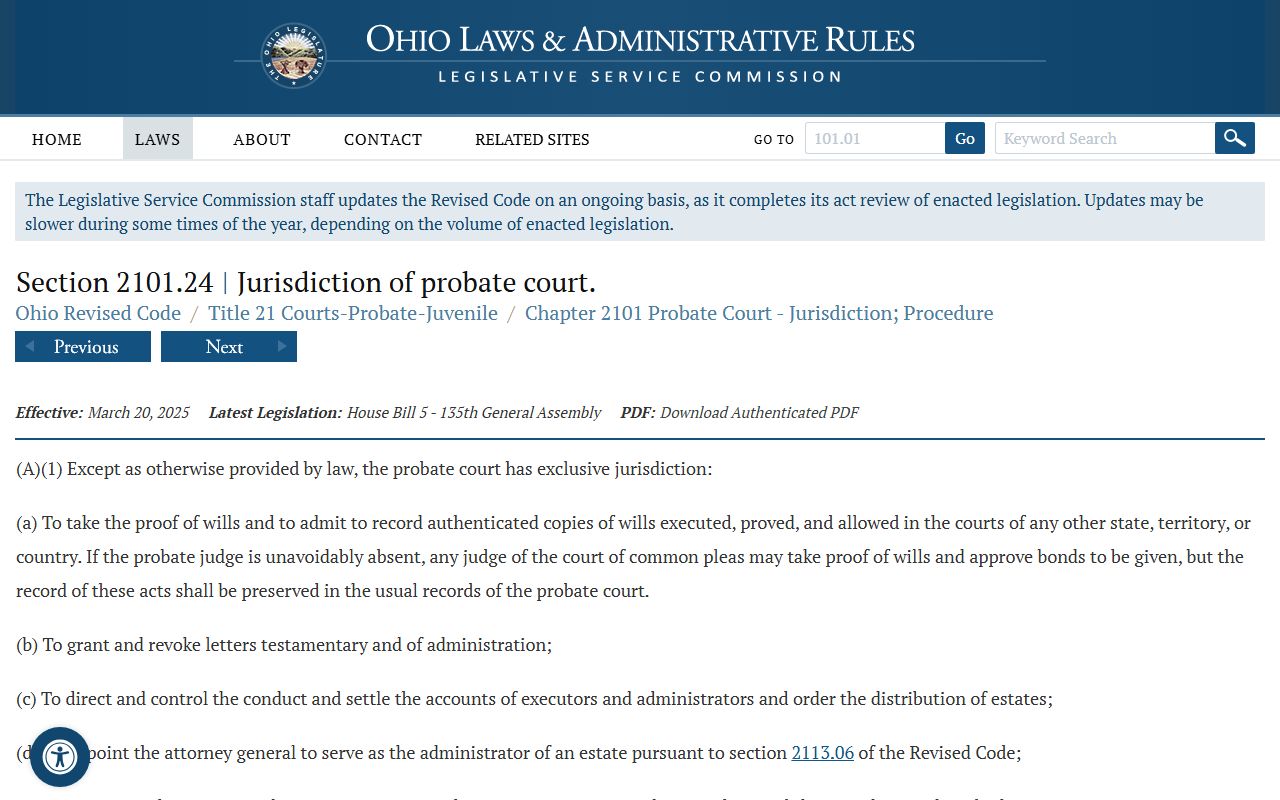
This shows the key statute that governs Ohio probate court records and defines what these courts can handle.
How to Search Probate Court Records in Ohio
Many Ohio counties now let you search probate court records online. Some use the CaseLook system. Others have their own court portals or e-services platforms. You can look up cases by party name, case number, or filing date in most of these tools. The depth of what shows up varies by county. Some show full docket entries and document images. Others just give you basic case info like the parties, the type of case, and the status.
In-person searches work too. Go to the probate court at the county courthouse and ask the clerk. They can pull records by name or case number. Bring a photo ID. Most Ohio probate courts are open from 8:00 or 8:30 AM until 4:00 or 4:30 PM on weekdays. The Ohio State Bar Association also has info on how probate courts work and what you can find there.
The Ohio State Bar Association provides educational resources about Ohio probate law and the procedures that apply in all 88 counties.

Their site covers estate administration types, guardianship rules, and how to find a probate attorney in Ohio.
When you search Ohio probate court records, keep in mind that some records are not public. Adoption files are sealed. Mental health commitments are restricted. The Ohio Supreme Court sets standard forms that all 88 probate courts must accept, so the paperwork looks the same from county to county even if the search tools differ. You can find these forms through the Supreme Court of Ohio website.
Types of Ohio Probate Court Records
Ohio probate courts handle many kinds of cases. Each type creates its own set of records. Knowing what you are looking for helps you search the right way and talk to the clerk with the right terms. Here are the main types of probate court records in Ohio:
- Estate files including wills, inventories, accountings, and letters of authority
- Guardianship records for minors and adults who cannot care for themselves
- Marriage licenses and certificates
- Adoption records (sealed and not public)
- Name change petitions and orders
- Civil commitment records for mental health cases
- Trust registrations and oversight documents
Estate records are the most common type of Ohio probate court record. When someone dies, the probate court handles the will, appoints an executor or administrator, and oversees the process of settling debts and giving out assets. Ohio has several paths for this. Full administration is for larger or complex estates. Release from administration works for smaller ones that meet certain rules. Summary release is the simplest path for very small estates with few assets. The choice of method affects which forms are filed and how long the court stays involved. All of it goes into the probate court record for that case.
Guardianship cases are another big part of Ohio probate court records. The court appoints a guardian when a minor has no parent able to care for them, or when an adult cannot make their own decisions due to mental illness or disability. These records include the petition, the court's findings, reports from investigators, and annual accountings that the guardian must file to show how they managed the ward's money and care.
Ohio Probate Court Records and Public Access
Most Ohio probate court records are open to the public. The Ohio Public Records Act under R.C. 149.43 says that court records are public records unless a specific law makes them private. You do not have to say who you are or why you want a record. The court must respond in a fair time frame. Each Ohio probate court has a public records policy based on this law.
The Ohio Public Records Act governs access to all government records in Ohio, including those held by probate courts in each of the 88 counties.
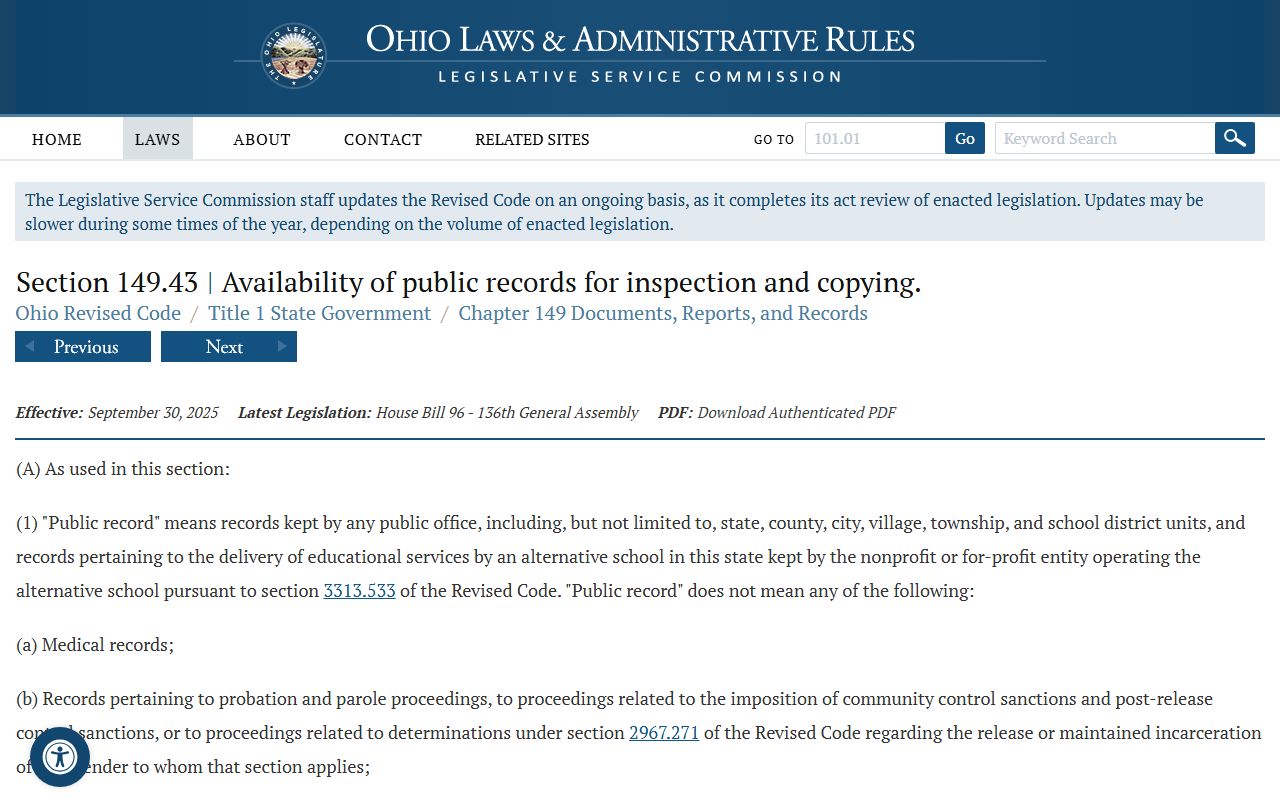
The Act lays out what is public, what exemptions exist, and what fees courts can charge for copies of probate court records.
There are some things you cannot get, though. Adoption records fall under a strict seal in Ohio. Mental health commitment files are not public. Records that contain medical info may be held back under privacy rules. Social security numbers and bank account numbers get blacked out on copies the court hands over. If a party asks the judge to seal something else, the judge can do so if there is a strong enough reason. But for the vast majority of Ohio probate court records, from estate files to guardianship cases to marriage licenses, anyone can walk in and ask for copies.
Fees for copies cover the actual cost of making them. Certified copies cost more than plain ones. The exact amount varies by county. Some Ohio probate courts charge per page, while others have a flat fee per document. Call ahead to ask about current rates so you know what to bring.
Historical Probate Court Records in Ohio
Ohio has some of the oldest probate court records in the country. The earliest go back to 1789, before Ohio was even a state. Counties that formed first, like Washington and Hamilton, have records from the late 1700s. Most Ohio counties have probate records going back to whenever the county was first set up. These records are a key source for anyone doing family history research.
The Ohio History Connection State Archives holds probate court records that counties have transferred after meeting retention rules. The Archives has estate files, will books, guardianship records, and more from all 88 counties, though what they have varies a lot by county. You can visit the Archives Library at 800 East 17th Avenue in Columbus, or request research help for a fee. They also have online databases including the Ohio Death Certificate Index covering 1908 to 1953.
One thing worth knowing: before December 20, 1908, Ohio probate courts kept birth and death records at the county level. After that date, the Ohio Department of Health Bureau of Vital Statistics took over. So if you need a birth or death record from before 1908, the probate court in that county is where to look.
The Ohio Department of Health now handles all vital records from 1908 to the present, but older birth and death records remain at the county probate courts.
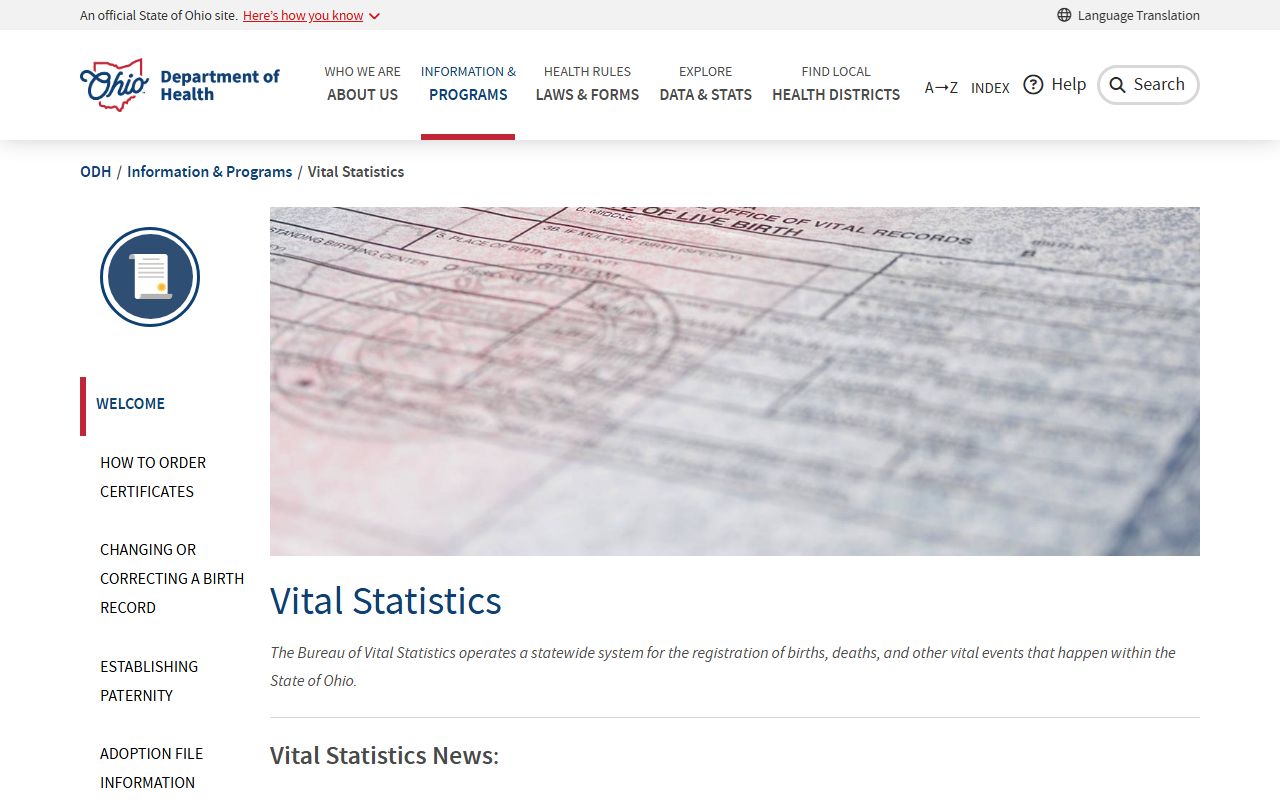
You can get certified copies of modern vital records through this office or order them online through VitalChek.
Note: Birth and death records before December 20, 1908 were kept by Ohio probate courts at the county level and may still be at the courthouse or at the State Archives.
Researching Ohio Probate Court Records
The Ohio Genealogical Society is the largest state genealogical society in the country. It helps people dig into Ohio probate court records and other sources for family history. The Society has chapters in many Ohio counties that keep local records and can help with research. They maintain the OhioAncestors.org database that pulls info from probate court records and other genealogy sources.
The Ohio Genealogical Society partners with the Ohio History Connection to provide access to historical court records from across the state.
Their library sits at the Ohio History Connection Archives in Columbus and holds family histories, county histories, and probate record indexes.
FamilySearch, run by The Church of Jesus Christ of Latter-day Saints, has a large collection called "Ohio Probate Records, 1789-1996." It covers all 88 Ohio counties with varying date ranges. The collection has probate case files, will books, guardian bonds, inventories, and dockets. Most of these can be viewed for free with a FamilySearch account. The records come from microfilm copies made from originals at county courthouses and the Ohio State Archives. For anyone doing estate or probate court records research in Ohio, this is one of the best free tools out there.
Browse Ohio Probate Court Records by County
Each of Ohio's 88 counties has its own probate court that handles estate cases, wills, guardianships, and other filings. Pick a county below to find local court contact info and resources for probate court records in that area.
Probate Court Records in Major Ohio Cities
Residents of Ohio cities file probate cases at the county probate court, not at a city office. Pick a city below to find out which county court handles probate court records for that area.